
Building a Profitable Rental Chalet: ROI, Down Payment and Budget Planning
Quebec has experienced a remarkable boom in vacation rentals since 2020. As travelers seek nature getaways closer to home, the rental chalet has become a coveted real estate asset combining lifestyle and profitability. But how much does it really cost to build a profitable rental chalet, and what ROI can you expect? At Viabois, we have been guiding investors for over twenty years as they transform forested land into a sustainable source of income.
This article demystifies the real numbers behind the Quebec market: construction costs, down payment, financing, ROI calculation, and concrete strategies to maximize rental revenue.
The Quebec Vacation Rental Market
According to recent industry data, the Quebec short-term rental market has grown by an average of 12 to 18 percent per year since 2020. Regions like the Eastern Townships, Charlevoix, Mont-Tremblant and Mauricie post average occupancy rates of 55 to 75 percent year-round, with peaks reaching 90 percent in high season.
Nightly rates typically range from $250 to $850 for a well-positioned chalet, depending on region, size and amenities. Log cabins with a hot tub, fireplace and panoramic view rent on average 30 to 45 percent higher than a conventional chalet of equivalent square footage.
The guest profile is also evolving. We observe increased demand for 3 to 5-night midweek stays driven by remote work. This smooths out revenue across the year and reduces dependence on summer weekends alone.
How Much Does a Viabois Rental Chalet Cost?
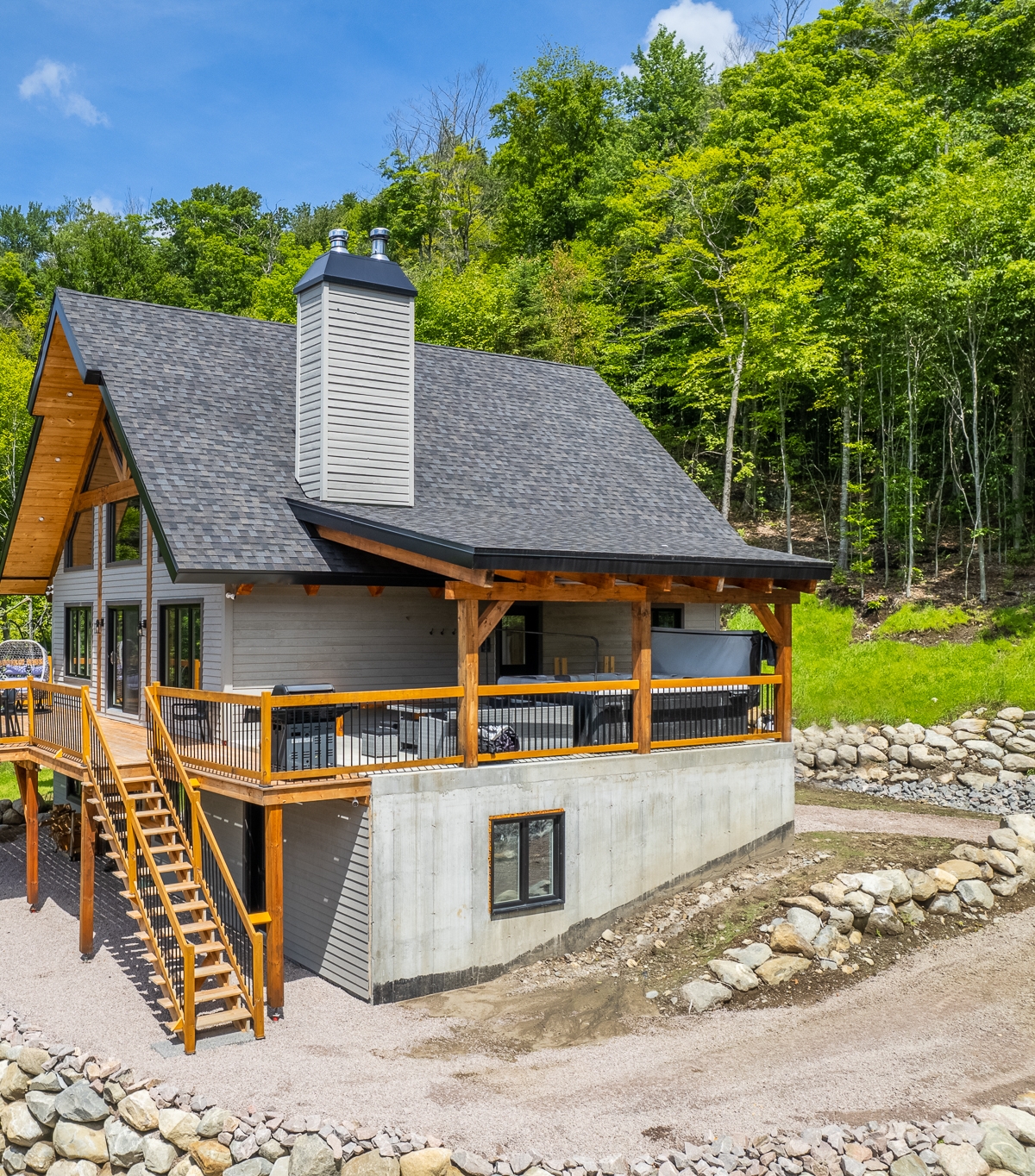
Construction budgets vary mainly with square footage, finish level and assembly type. For a log cabin built to rental standards, here are the ranges we observe in 2026 on the Quebec market:
• Small turnkey rental chalet (700 to 900 sq ft): $285,000 to $380,000
• 2-bedroom family chalet (1,100 to 1,400 sq ft): $410,000 to $540,000
• Large 3-4 bedroom chalet with mezzanine (1,600 to 2,200 sq ft): $575,000 to $780,000
• High-end chalet like North Forest (2,400+ sq ft): $850,000 to $1.2M
These figures cover the solid log structure, foundation, high-performance thermal envelope, complete mechanical systems and interior finishes. Land, access work (driveway, electrical service, well, septic) and municipal permits are extra — budget another $75,000 to $200,000 depending on the site.
The choice between a log home kit, post-and-beam assembly or hybrid construction also influences final cost. Our Lac Fortin clients chose a hybrid structure that optimized cost per square foot while preserving the authentic massive timber aesthetic.
Down Payment, Financing and Available Programs
For a chalet intended for rental use, lenders typically require a down payment of 20 to 25 percent of total cost. Some banks consider the project a revenue property if rental use is contractually documented, opening the door to commercial financing whose terms differ from standard residential mortgages.
Several financing routes exist: construction mortgage disbursed in stages, home equity line of credit on an existing property, or private financing to cover the down payment. Investissement Québec and certain regional cooperatives also offer tourism development support programs.
Practical advice: prepare a complete financial file with a five-year rental revenue projection, comparative analysis of similar chalets in your region and a property manager letter if you plan to delegate operations. Banks recognize up to 60 percent of projected rental revenue when calculating debt service ratios.
ROI Calculation: Revenue, Expenses and Break-Even
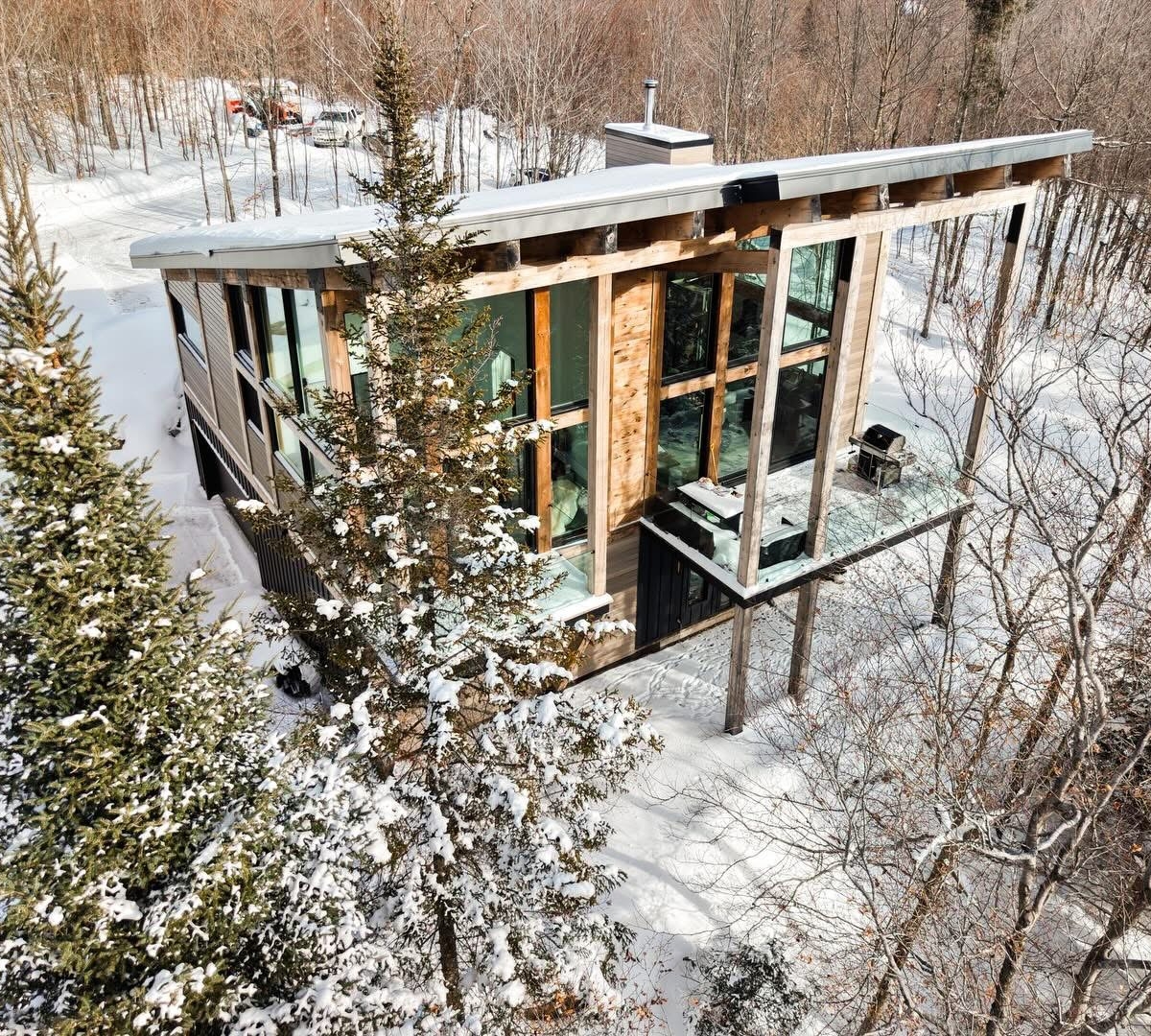
Take a concrete example: a 1,200 sq ft Viabois chalet built for $480,000 all in, located in a recognized tourist region. With an average rate of $395 per night and 62 percent occupancy, gross annual revenue reaches approximately $89,500.
Typical expenses represent 32 to 42 percent of gross revenue: platform commission (Airbnb, Vrbo) 3 to 15 percent, cleaning and concierge 12 to 18 percent, energy and heating 4 to 6 percent, insurance 3 to 4 percent, maintenance and reserves 5 to 7 percent, municipal and school taxes 2 to 3 percent. Net operating income lands between $52,000 and $60,000.
On a net investment of $480,000, operating ROI sits between 10.8 and 12.5 percent before amortization and before appreciation. Add real estate appreciation, historically 4 to 7 percent annually in Quebec resort regions. Break-even, considering financing, is generally reached between year 8 and year 12.
Strategies to Maximize Profitability
First, optimize off-season occupancy. A chalet properly equipped for winter (fireplace, outdoor hot tub, fast access to trails) often generates 40 percent of annual revenue between December and March. Themed packages — gourmet getaway, remote-work retreat, wellness stay — attract guests willing to pay a premium.
Second, adopt dynamic pricing. Tools like PriceLabs or Beyond Pricing automatically adjust rates based on demand, local events and competition. Our clients have reported revenue increases of 18 to 27 percent in the first year of implementation.
Third, multiply ancillary services: kayak, bike, snowshoe rentals, firewood delivery, in-home chef, regional welcome basket. These extras can add $6,000 to $12,000 per year at margins above 60 percent.
Finally, polish the guest experience to collect outstanding reviews: a chalet rated 4.9/5 on Airbnb gets on average 2.3 times more bookings than one rated 4.5/5, for marginal management effort.
Conclusion: A Strong Project, When Planned Well
Building a profitable rental chalet in Quebec remains in 2026 one of the strongest alternative investments, provided it is built on durable technical foundations and a rigorous financial plan. Viabois log construction offers a differentiator on the market: authenticity, longevity, energy performance and photogenic appeal for booking platforms.
To discuss your project, browse our rental chalet models or request a personalized quote. Our team can provide a detailed budget projection tailored to your land and yield objectives.